

Best suburbs for first home buyers in Australia right now
Prices have fallen for six straight months and 97% of capital-city suburbs lost value last quarter. Here are the suburbs where first home buyers still find value, plus the caps, schemes and tactics that matter.
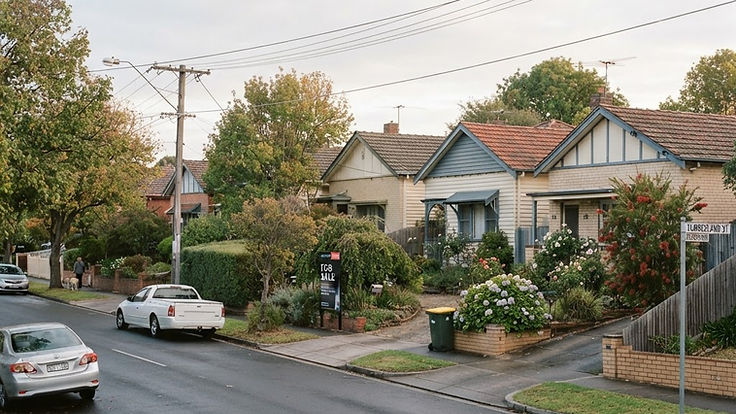
Australia's housing downturn has reached the point where first home buyers are, for the first time in years, negotiating from something close to equal footing. National dwelling values fell 0.2 per cent in September, the sixth consecutive monthly decline, and sit 3.3 per cent below their March 2026 peak according to the realestate.com.au Home Price Report. Cotality's Home Value Index is blunter again: values are down 5.2 per cent from the March peak, combined capital city values fell 4.3 per cent over the September quarter, and 97 per cent of capital city suburbs lost value over the past three months.
The cause is interest rates. The Reserve Bank lifted the cash rate at its late September meeting, its fourth increase this year, taking the cash rate to 4.60 per cent. Canstar estimates those four rises have cut about $47,400 from the borrowing capacity of a buyer earning the average full-time wage of $108,650. Homes are also taking longer to sell, a median 39 days across the capitals compared with 23 days a year earlier, and vendors are accepting a median 4.4 per cent less than their asking price to reach a contract, according to Cotality's October chart pack. Sales volumes have fallen more than 20 per cent.
That is why buyers are seeing real falls rather than just softer headlines. Since their peaks, Sydney values are down 8.6 per cent, about $112,000 on the median home, and Melbourne is down 6.4 per cent, or roughly $53,000, both according to Cotality. AMP chief economist Shane Oliver expects national prices to fall at least 10 per cent and warns a deeper fall of around 15 per cent is possible if distressed listings and unemployment rise. Nobody should assume the bottom is in, but the market has swung far enough that waiting for a perfect entry point is now a strategy with its own cost.
Government support has changed too. The Australian Government 5% Deposit Scheme was expanded on 1 October 2025 to every first home buyer, with no income test and no limit on places, and it now underpins almost half of all first home loans. More than 102,000 people were supported in its first 12 months, running at about 8,400 a month since June. The catch is the location price cap: $1,500,000 in Sydney and designated regional centres and $800,000 elsewhere in New South Wales, $950,000 and $650,000 in Victoria, $1,000,000 and $700,000 in Queensland, $850,000 and $600,000 in Western Australia, $900,000 and $500,000 in South Australia, $700,000 and $550,000 in Tasmania, $1,000,000 in the ACT, $750,000 in Darwin and $600,000 in the rest of the Northern Territory. The cap applies to both the purchase price and the lender's valuation.
Help to Buy is the other new pathway. It opened on 5 December 2025 and lets eligible buyers in with a 2 per cent deposit while the government takes an equity share of up to 30 per cent of an existing home or 40 per cent of a new build, with 10,000 places a year. Income must be at or below $103,000 for a single applicant or $165,000 for a couple or single parent under the current thresholds. It is not a grant: the government's share is repaid when you sell, buy it back or refinance out of it, and the amount owed moves with the value of the home. It is offered through a small panel of participating lenders, and Western Australia and Tasmania were not participating when it launched, so confirm availability with Housing Australia before you plan around it.
With all of that in mind, these are the suburbs worth a serious look today. Every median sits under the relevant scheme cap, but the figures come from the sources named and cover different periods, so treat each one as a starting point for your own research. Suburb medians hide enormous variation from street to street.
New South Wales. Sydney's west is where the discounts run deepest. Willmot has a median of $842,379 and fell 8.0 per cent in the three months to September, one of the sharpest declines of any affordable Sydney suburb (Cotality, published by Guardian Australia). The Blacktown pocket around it is the last part of Sydney where almost every house is under $1 million: Bidwill at $847,000, Lethbridge Park at $847,000, Tregear at $842,000, Blackett at $846,000, Whalan at $859,000 and Emerton at $860,000, with more than 96 per cent of houses in each priced below seven figures (PropTrack). Blacktown itself has a median of $1,083,000 and fell 6.7 per cent over the same three months (Cotality), which shows the middle of the market is moving too. Further out, St Marys sits at $1,058,000 and Wyoming on the Central Coast at $930,000, while the regional centres of Bathurst at $660,000 and Tamworth at $680,000 sit comfortably under the $800,000 regional cap (PropTrack). The $1,500,000 cap applies to Sydney and the Central Coast, but not to Bathurst or Tamworth.
Victoria. Melbourne's median dwelling value of $780,550 makes it the cheapest of the two biggest capitals (Cotality, September), and its affordable fringe is where first home buyers get the most house for their money. Melton has a median of $546,126, Kurunjang $598,689, Dallas $617,846, Coolaroo $617,200, Broadmeadows $651,472, Albanvale $661,159, Meadow Heights $662,508, Frankston North $680,398, Campbellfield $699,013 and Carrum Downs $790,399, all inside the $950,000 cap (PropTrack). Werribee at $639,000, Tarneit at $663,000, Cranbourne East at $735,000 and Lalor at $756,000 remain the best value on the western and northern growth corridors. Victoria charges no stamp duty for first home buyers up to $600,000 and a concession to $750,000, so Melton, Kurunjang, Dallas and Coolaroo fall in the full exemption and the rest of that list on the concession.
Queensland. Brisbane's median fell 1.5 per cent in September to $1,048,880, $59,000 below its May level (Cotality). Logan Central at $734,000, Lowood at $681,000 and Ripley at $790,000 are the standouts in the Greater Brisbane market, with Bray Park at $864,000 and Griffin at $888,000 for buyers who want the northern corridor (PropTrack). Greater Brisbane generally uses the $1,000,000 cap, but postcode boundaries matter, so confirm yours before you make an offer. Established homes are exempt from stamp duty to $700,000, with a concession to $800,000.
South Australia and Western Australia. Adelaide fell 0.6 per cent in September and is 2.5 per cent below its May peak, though it remains 5.6 per cent higher over the year (realestate.com.au). Smithfield Plains, around $600,000 to $622,000 depending on the data provider, and Elizabeth North at about $580,000 to $593,000 are the entry-level options within the $900,000 cap. In Perth, where the median is $975,022 and 4.2 per cent below its peak, Armadale at roughly $610,000 to $645,000 and Seville Grove at about $690,000 sit inside the $850,000 cap (REIWA-based lender data). South Australia charges no stamp duty for first home buyers on new homes at any price but nothing on established homes, while Western Australia exempts duty to $600,000 and tapers to $800,000.
The smaller markets. Hobart's median of $741,496 is above the $700,000 Tasmanian cap, so townhouses and units are the practical entry point. Canberra's median of $861,744 sits under the ACT's $1,000,000 cap, and the ACT abolished stamp duty for first home buyers entirely from 1 July 2026. Darwin, the only capital where values rose in September and 12.0 per cent higher over the year, has a median of $638,000, comfortably inside the $750,000 cap.
One pattern is worth knowing before you shortlist: units are holding up better than houses. National house values fell 0.3 per cent in September and are 0.4 per cent lower over the year, while unit values were flat and remain 1.8 per cent higher (realestate.com.au). Apartments and townhouses are often the cheapest way into a suburb you could not otherwise afford, but read the strata report, check levies and ask about special levies before you commit.
Get pre-approval now, and test it against another rate rise. Markets were pricing an 82 per cent chance of an increase to 4.85 per cent at the November Reserve Bank meeting as at 28 October (ASX RBA Rate Tracker). If your budget only works at today's rate, it does not work.
Check the scheme cap, not just the suburb. The cap applies to the purchase price and the lender's valuation, it differs between capital cities, regional centres and everywhere else, and some suburbs span more than one postcode. Confirm the exact figure before you negotiate.
Negotiate like the market has turned, because it has. With a median discount of 4.4 per cent and homes taking 39 days to sell, offers below the asking price are normal. Ask how long the property has been listed, whether the price has been reduced, and what the vendor has already knocked back.
Use the schemes carefully. A 5 per cent deposit avoids lenders mortgage insurance but leaves you with a larger loan and less equity if prices keep falling. Help to Buy lowers your loan but hands over part of the upside. Run both against a plain 20 per cent deposit if you can manage one.
Budget beyond the deposit: stamp duty or its absence, conveyancing, building and pest inspections, loan fees, moving costs, and at least three months of repayments in reserve.
Inspect for the problems a falling market exposes: structural movement, waterproofing, drainage, and flood or bushfire overlays. Insurance in some postcodes has risen faster than prices have fallen.
Buy for a holding period, not a headline. Ten years is a safer assumption than two, and the suburbs that recover first are usually those with transport, schools and jobs rather than the ones with the deepest discounts.
Use the data that is already available. Every suburb on EstateLister has its own page showing what is listed for sale and for rent in that postcode, and a saved search will alert you when a matching home is listed or reduced.
What happens next matters more than any single suburb. Another rate rise in November would squeeze borrowing capacity again, while a pause would steady confidence going into the new year. For a first home buyer with finance approved and a deposit ready, the combination of falling prices, discounting vendors and expanded government support is the strongest set of conditions since 2020.
Sources: Cotality Home Value Index and October 2026 Monthly Housing Chart Pack; Guardian Australia, 1 October 2026; realestate.com.au Home Price Report, September 2026; realestate.com.au first-home buyer suburbs to watch, April 2026 (PropTrack medians for the 12 months to November 2025); Housing Australia and firsthomebuyers.gov.au price caps; ASX RBA Rate Tracker, 28 October 2026; Canstar; state revenue offices.
More property news


Buyer Confidence Hits Lows Amidst Interest Rate Pressures
New research shows 61 per cent of property market participants feel less confident following recent interest rate increases.

Affordable housing prices decline faster than luxury
Cheaper properties are experiencing sharper price falls than luxury homes as investor activity retreats.

Darwin Homeowners Weigh Selling Amid Market Uncertainty
Darwin's housing market shows resilience with a 0.3% price rise, yet some owners are selling early to avoid potential downturns.